
Importer in India for BIS Certification: Complete Guide 2026
Introduction
Importing products into India requires strict compliance with quality regulations set by the Bureau of Indian Standards (BIS). For many product categories, BIS certification is mandatory before import, especially under Quality Control Orders (QCOs).
This guide explains everything importers need to know about BIS certification in India, including process, documents, and compliance requirements.
What is BIS Certification for Importers?
BIS certification ensures that products meet Indian safety and quality standards. Importers must register products under applicable BIS schemes before selling or distributing them in India.
Key BIS Schemes
- CRS – Electronics & IT products
- FMCS – Foreign manufacturers
- ISI Scheme – Products under QCO
Why BIS Certification is Mandatory
- Product seizure by customs
- Heavy penalties
- Ban on product sales
Products Requiring BIS Certification
- Electronics (TVs, mobiles, laptops)
- Electrical appliances
- Steel and construction materials
- Toys and consumer goods
BIS Certification Process
- Identify applicable IS standard
- Select certification scheme
- Product testing in BIS-approved lab
- Submit documentation
- Grant of registration
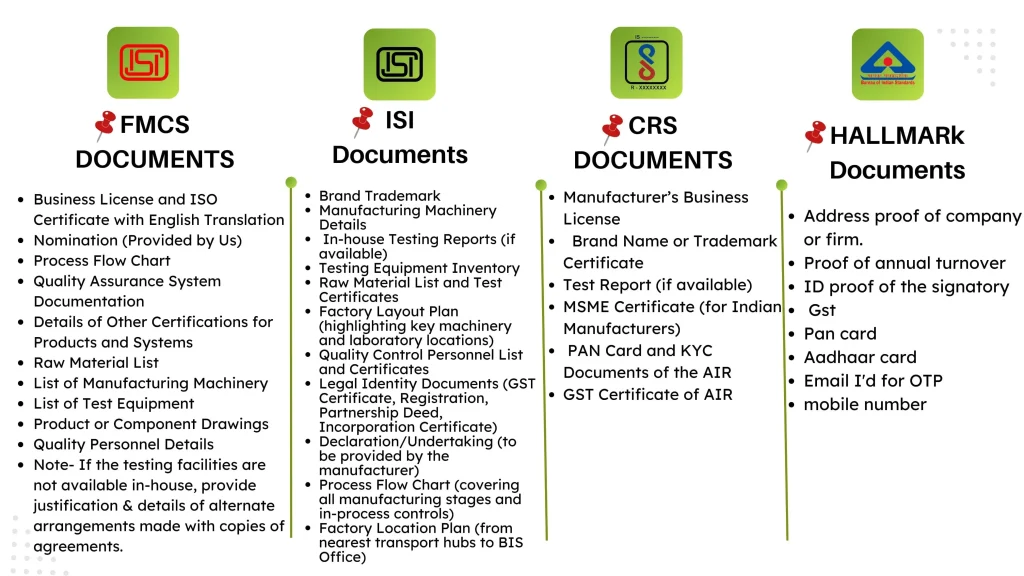
Documents Required
- Importer business license
- AIR (Authorized Indian Representative)
- Test reports
- Product specifications
- Trademark authorization
- Manufacturing details
Role of Importer
- Ensure compliance with BIS standards
- Coordinate testing and documentation
- Act as AIR
- Maintain quality consistency
Challenges for Importers
- Incorrect product classification
- Testing delays
- Documentation errors
- Frequent QCO updates
Cost of BIS Certification
Costs depend on product category, testing, and certification scheme. It includes lab testing fees, application charges, and consultancy fees.
Conclusion
BIS certification is a mandatory requirement for importers in India. Proper compliance ensures smooth market entry and avoids legal complications.
Start BIS Certification for Import Today
Get expert assistance and avoid delays in approval
Get Free ConsultationBIS Certification Schemes Comparison
| Scheme | Applicable For | Who Applies | Mark Used |
|---|---|---|---|
| CRS | Electronics & IT Products | Manufacturer / Importer | Self Declaration |
| FMCS | Foreign Manufacturers | Overseas Manufacturer | ISI Mark |
| ISI Scheme | QCO Regulated Products | Manufacturer | ISI Mark |
Frequently Asked Questions
Is BIS certification mandatory for importers?
Yes, BIS certification is required for all products under Quality Control Orders before import.
Can importers apply for BIS certification?
Importers can act as Authorized Indian Representative (AIR) for foreign manufacturers.
What happens without BIS certification?
Products may be seized at customs and legal penalties may apply.
How long does BIS certification take?
Typically 30–90 days depending on product and scheme.
Which products require BIS certification?
Electronics, appliances, toys, steel products, and other regulated items.
Start BIS Certification for Import Today
Talk directly with our expert and get complete guidance for your certification process.
💬 WhatsApp Now 📞 Call Now✔ Quick response | ✔ Expert guidance | ✔ End-to-end support